Center Certification & Testing International

Wireless electronics such as Bluetooth earphones, smart watches, Wi-Fi routers and drone controllers are widely used across consumer, household, industrial and medical sectors. As a prime North American destination for foreign trade, Canada mandates compulsory ISED IC Certification for all export wireless goods. Any device operating on 2.4GHz, 5GHz or other RF bands must complete this certification to gain legal sales eligibility.
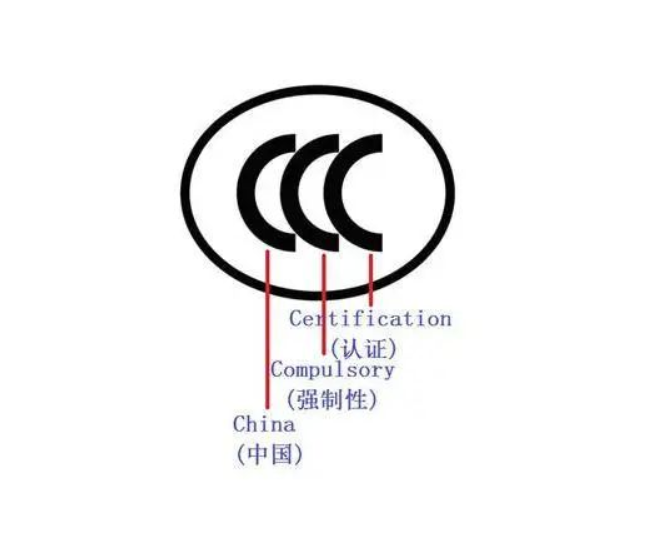
With improved domestic electronic product supervision in China, power banks have been incorporated into China’s mandatory CCC certification catalogue. Products without valid certification are prohibited from factory release, domestic sales and import/export, hence CCC becomes a mandatory prerequisite for manufacturers to start compliant production and expand market business. Many small and medium-sized producers encounter test failure and delayed certification due to unfamiliar application rules. The following sorts out document checklist and full certification workflow for faster certification acquisition.

Chinese wireless mouse manufacturers must secure IMDA certification to export products to Singapore. Under local regulations, all mice equipped with 2.4GHz RF modules require official IMDA registration for smooth customs clearance and sales in physical supermarkets and online stores; non-certified commodities will be detained and banned from selling, making IMDA the primary market entry barrier for Singapore exports. Many factories face delayed shipment due to incomplete paperwork or improper certification operation. This article sorts out document requirements and application workflow to help manufacturers obtain certification efficiently and develop Singapore’s consumer market.

ANATEL is Brazil’s exclusive regulatory authority for telecommunication compliance. All smart glasses embedded with Wi-Fi, Bluetooth and other RF communication modules must obtain mandatory ANATEL certification; uncertified items are denied customs clearance and domestic sales in Brazil. For domestic Chinese smart glass manufacturers, proper document preparation and familiarization with certification rules effectively shorten certification lead time and lower modification costs, which is the prerequisite to expand markets in Brazil and Latin America.
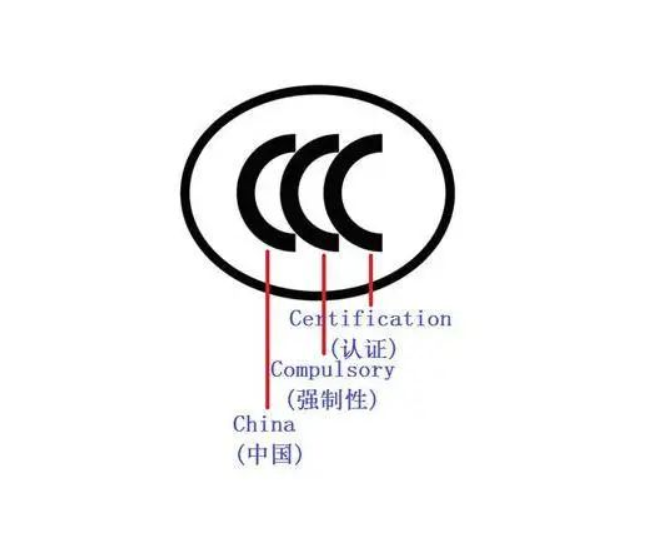
Under China’s domestic consumer electronics supervision framework, mandatory CCC certification for mobile phone chargers is the core market access qualification enabling legal production, circulation and sales. It serves as a critical measure to standardize mass production specifications, avoid regulatory penalties and cut down product safety hazards. With increasingly refined market supervision including unannounced factory inspections and regular random sampling, manufacturers can only achieve sustainable operation by completing certification formally and enforcing compliance during mass production.
As mainstream office and entertainment digital accessories, wireless mice must meet Japan\'s strict radio regulatory requirements for entering the Japanese market. TELEC Certification is a mandatory access certification established by Japan\'s Ministry of Internal Affairs and Communications for radio frequency equipment. All mice equipped with wireless transmission functions must hold a TELEC certificate to be legally sold and circulated in Japan, serving as an essential compliance checkpoint for enterprises layouting Japan\'s digital market.
In today\'s fast-paced global life, lithium-ion batteries have penetrated all aspects of life with high efficiency, light weight and long service life. From smartphones and electric vehicles to large-scale energy storage systems, they have become an indispensable power core for modern industry and consumer electronics.

With the in-depth development of education informatization, educational robots have become indispensable assistants in campus and family education due to vivid interactive experience and rich teaching scenarios. As smart electronic devices integrated with Wi-Fi, Bluetooth and other wireless communication modules, educational robots must pass a legal compliance threshold — SRRC Certification (Radio Transmission Equipment Type Approval Certification) before officially entering the Chinese market.
Learn the latest exciting content

Tik Tok